Asbestos was widely used throughout the UK construction industry for decades due to its durability, insulation properties, and resistance to heat and fire. Although banned in the UK in 1999, asbestos-containing materials (ACMs) can still be found in thousands of residential, commercial, and industrial buildings today.
At Atlas Asbestos, we provide professional asbestos surveying, asbestos testing, asbestos sampling, and asbestos removal services across domestic and industrial properties. Understanding where asbestos is commonly located is essential for property owners, contractors, landlords, and facilities managers before carrying out refurbishment, maintenance, or demolition works.
What Is Asbestos?
Asbestos is a naturally occurring fibrous mineral that was commonly added to building materials and industrial products. When asbestos-containing materials are disturbed or damaged, dangerous fibres can become airborne and inhaled, potentially leading to serious health conditions including:
- Mesothelioma
- Asbestosis
- Lung cancer
- Pleural thickening
Because of these risks, identifying and safely managing asbestos is a legal requirement under the Control of Asbestos Regulations 2012.
Where Is Asbestos Found in Domestic Properties?
Many homes built before 2000 may still contain asbestos materials. The likelihood is especially high in properties constructed between the 1950s and late 1980s.
Common Areas Where Asbestos May Be Found in Homes
Asbestos Insulation Board (AIB)
AIB was commonly used for:
- Ceiling tiles
- Partition walls
- Soffits
- Fireproof panels
- Cupboards and service risers
AIB is considered a higher-risk asbestos material because it can release fibres more easily when disturbed.
Textured Coatings (Artex)
Decorative textured coatings on ceilings and walls may contain asbestos, particularly older Artex finishes.
Vinyl Floor Tiles
Older thermoplastic floor tiles and adhesives can contain asbestos fibres.
Asbestos Cement Products
These lower-risk materials were widely used externally, including:
- Garage roofs
- Shed roofs
- Gutters and downpipes
- Water tanks
- Exterior wall panels
Behind Fuse Boxes and Fireplaces
AIB panels were commonly installed behind fuse boards and around fireplaces for heat protection.
Bath Panels and Toilet Cisterns
Some older bathroom fixtures and backing panels may also contain asbestos.
Domestic Asbestos Locations to Be Aware Of
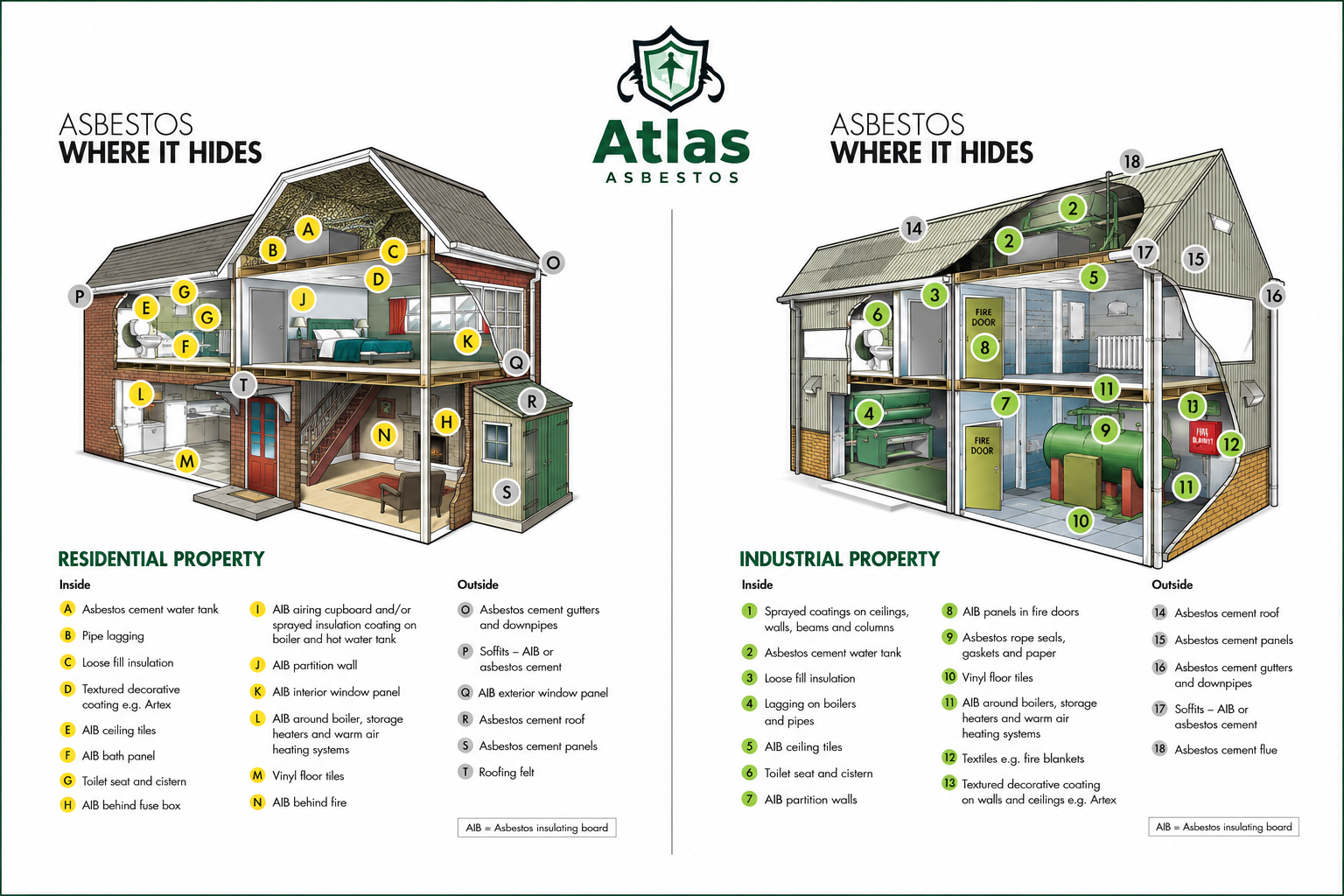
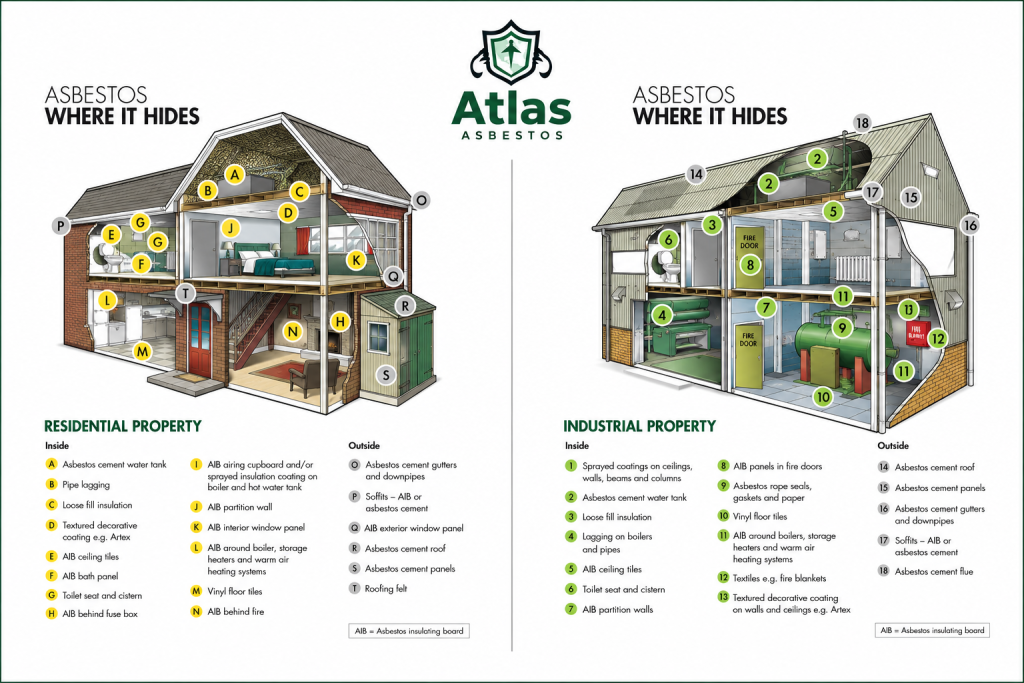
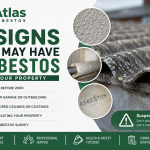
The image below highlights some of the most common locations where asbestos may still be present within residential properties:
- Loft spaces
- Pipework insulation
- Ceiling coatings
- Floor tiles
- Soffits
- Boiler cupboards
- Roofing materials
- Window panels
These materials should never be disturbed without appropriate asbestos testing or surveying.
Where Is Asbestos Found in Industrial Buildings?
Industrial properties often contain larger quantities of asbestos due to historic use in manufacturing, insulation, and fire protection systems.
Factories, warehouses, schools, hospitals, and plant rooms are among the most common high-risk environments.
Common Industrial Asbestos Materials
Sprayed Coatings
Sprayed asbestos insulation was frequently applied to:
- Structural steel
- Ceilings
- Walls
- Columns and beams
This is a highly friable and dangerous asbestos material.
Boiler and Pipe Insulation
Industrial heating systems and pipework were heavily insulated using asbestos lagging and thermal insulation products.
Fire Doors and Fire Protection Panels
Many older fire doors contain asbestos insulation board cores or asbestos-based panels.
Industrial Roofing and Cladding
Asbestos cement sheets were extensively used in:
- Factory roofs
- Agricultural buildings
- Warehouse cladding
- Plant enclosures
Rope Seals, Gaskets and Plant Equipment
Industrial machinery often incorporated asbestos-containing seals and gaskets due to heat resistance.
Ceiling Tiles and Partition Walls
AIB ceiling systems and partition walls remain common in older commercial premises.
Asbestos Flues and Ventilation Systems
Plant rooms and industrial heating systems may still contain asbestos flues and insulation materials.
Why You Should Never Disturb Suspected Asbestos
Many asbestos-containing materials appear harmless when intact. However, drilling, sanding, cutting, breaking, or removing these materials can release microscopic fibres into the air.
If you suspect asbestos within your property:
- Do not disturb the material
- Avoid DIY removal
- Arrange professional asbestos sampling
- Obtain an asbestos survey before refurbishment works
Types of Asbestos Surveys
At Atlas Asbestos, we offer:
Management Surveys
Designed to locate and manage asbestos during normal occupation and maintenance.
Refurbishment and Demolition Surveys
Required before intrusive works, refurbishments, or demolition projects.
Asbestos Bulk Sampling and Testing
Suspected materials are sampled and analysed by UKAS-accredited laboratories.
Professional Asbestos Removal Services
Where asbestos removal is required, works should only be completed by competent and appropriately trained contractors. At Atlas Asbestos or removal services include:
- Domestic asbestos removal
- Industrial asbestos removal
- Garage roof removal
- Asbestos cement removal
- Waste collection and disposal
- Emergency asbestos response
All works are completed in accordance with guidance from the Health and Safety Executive and current UK asbestos legislation.
Need an Asbestos Survey or Removal Quote?
If your property was built before 2000 and you suspect asbestos may be present, our experienced team can help.
We provide:
✅ Asbestos surveys
✅ Asbestos testing and sampling
✅ Non-Licensed asbestos removal
✅ Domestic and industrial asbestos services
Contact Atlas Asbestos today for professional advice, fast turnaround times, and fully compliant asbestos solutions.
 Previous Post
 Next Post
