
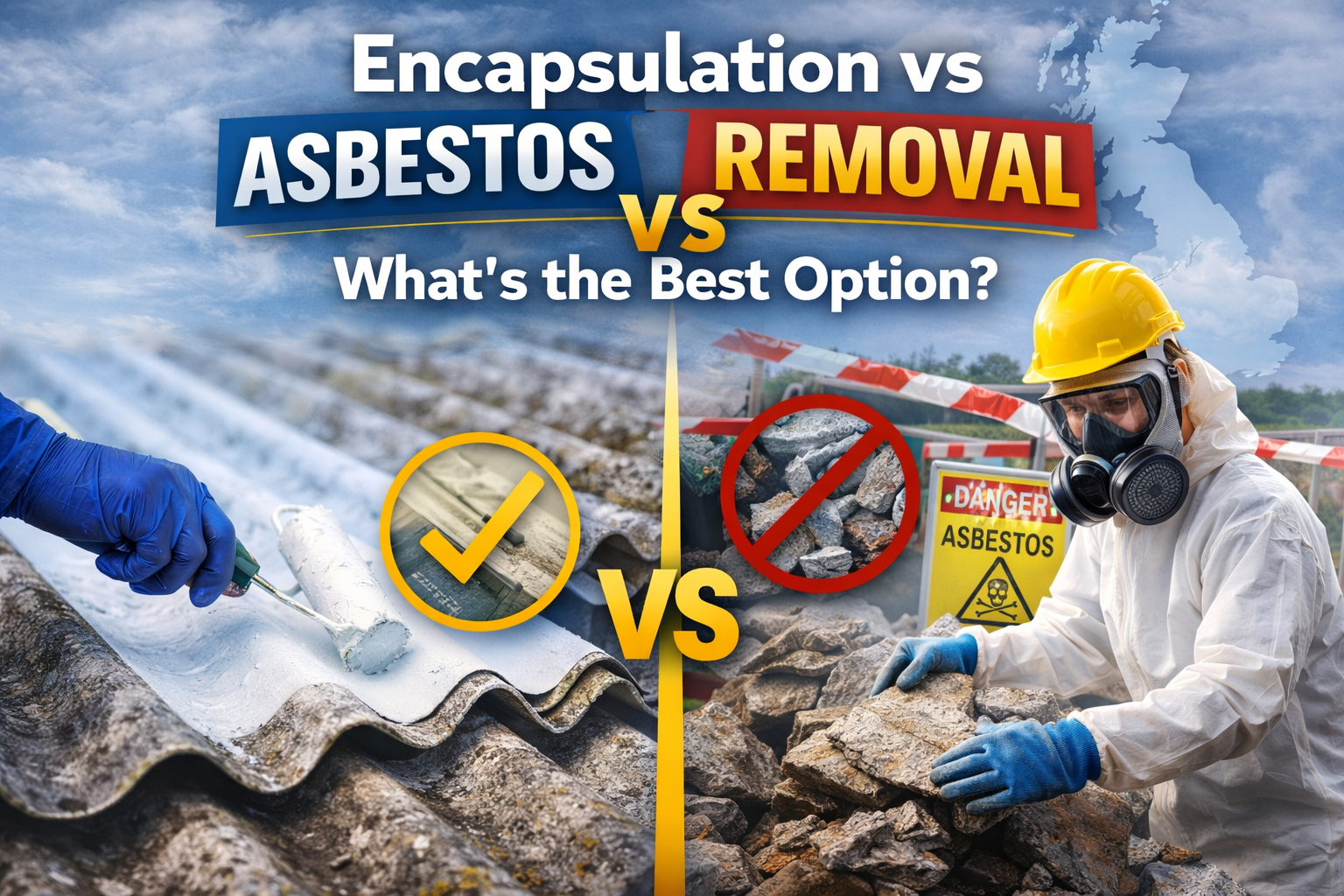
When asbestos-containing materials are discovered in a building, property owners often face an important decision: should the asbestos be encapsulated or removed completely?
Both encapsulation and removal are recognised methods for managing asbestos safely. The right option depends on factors such as the condition of the material, the type of asbestos present, and whether the area will be disturbed in the future.
Understanding the differences between these two approaches can help property owners make informed decisions about managing asbestos safely and effectively.
What Is Asbestos Encapsulation?
Asbestos encapsulation involves sealing asbestos-containing materials with a protective coating or barrier. This prevents asbestos fibres from becoming airborne and reduces the risk of exposure.
Encapsulation methods may include:
- Applying specialist sealants or coatings
- Installing protective boards or coverings
- Wrapping materials with durable barriers
The aim is to lock the asbestos fibres in place, preventing them from being released into the air.
Encapsulation is often recommended when asbestos materials are in good condition and unlikely to be disturbed.
What Is Asbestos Removal?
Asbestos removal involves physically removing asbestos-containing materials from a property and safely disposing of them in accordance with UK regulations.
Removal is usually carried out by trained specialists using controlled techniques designed to prevent fibres from spreading during the process.
Typical steps in asbestos removal include:
- Identifying the asbestos material through a professional survey
- Setting up controlled work areas and safety measures
- Carefully removing the asbestos-containing materials
- Transporting the waste to a licensed disposal facility
Removal completely eliminates the asbestos material from the property.
When Encapsulation May Be the Best Option
Encapsulation may be recommended in situations where asbestos materials are stable and unlikely to be disturbed.
Examples include:
- Asbestos cement roofing in good condition
- Undamaged insulation boards in low-risk areas
- Structural materials that remain sealed behind walls or ceilings
Encapsulation can be a cost-effective and less disruptive solution, particularly in buildings that remain occupied.
However, the asbestos still remains within the property and may need ongoing monitoring.
When Asbestos Removal Is Recommended
Removal is often recommended when asbestos materials:
- Are damaged or deteriorating
- Could be disturbed during renovations
- Pose a higher risk of fibre release
- Are located in high-traffic or accessible areas
If refurbishment or demolition work is planned, asbestos removal may be necessary before construction work can begin.
Removing asbestos eliminates the long-term risk associated with leaving the material in place.
If you are unsure whether a material requires removal or encapsulation, contact our dedicated team at Atlas Asbestos, who will assess the situation and always give the best advice.
Key Differences Between Encapsulation and Removal
| Encapsulation | Removal |
|---|---|
| Seals asbestos in place | Removes asbestos completely |
| Usually lower cost | Typically more expensive |
| Less disruption to occupants | May require controlled work areas |
| Requires ongoing monitoring | Permanent solution |
Both methods can effectively manage asbestos risks when carried out by trained professionals.
The Importance of a Professional Asbestos Survey
Before deciding between encapsulation and removal, a professional asbestos survey should be carried out to identify the material and assess its condition.
A survey will help determine:
- The type of asbestos present
- The condition of the material
- The risk of fibre release
- Whether management, encapsulation, or removal is recommended
Accurate identification is essential to ensure the correct approach is taken.
Final Thoughts
Both asbestos encapsulation and asbestos removal can be safe and effective solutions for managing asbestos-containing materials. The best option depends on the location, condition, and future plans for the property. At Atlas Asbestos, we can carry out any of these tasks for you.
Encapsulation can be a practical option when asbestos is stable and unlikely to be disturbed, while removal may be the best choice when materials are damaged or renovation work is planned.
If you suspect asbestos may be present in your property, arranging a professional asbestos survey is the first step toward identifying the safest management strategy.
 Previous Post
 Next Post
