
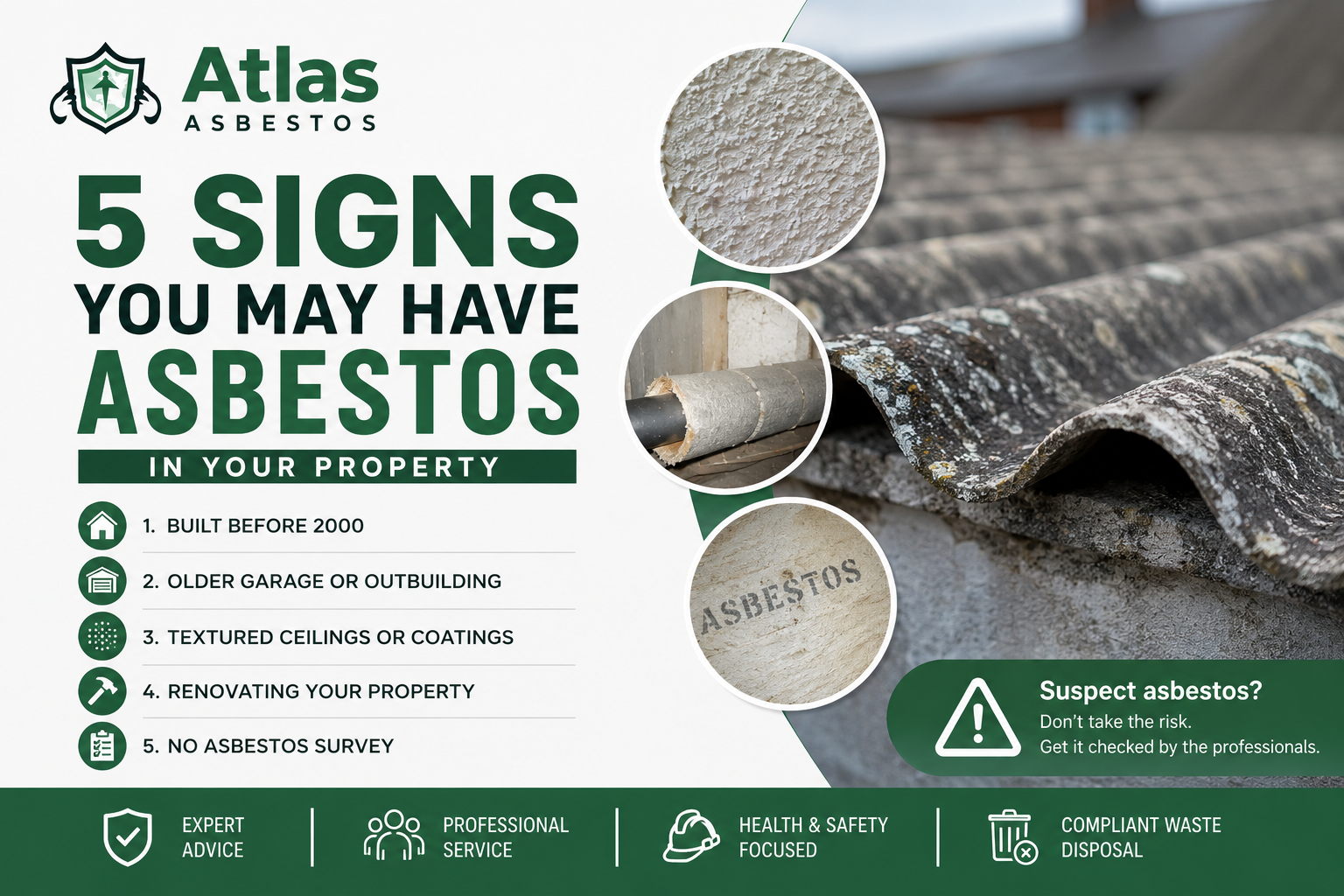
If your property was built before the year 2000, there’s a chance asbestos-containing materials (ACMs) could still be present. Asbestos was widely used throughout UK construction for decades because of its strength, insulation properties, and fire resistance. Although it was banned in the UK, many homes, commercial buildings, garages, and industrial properties still contain asbestos today.
The challenge is that asbestos is often difficult to identify without professional testing. Disturbing asbestos-containing materials can release harmful fibres into the air, creating serious health risks.
Here are five common signs that asbestos may be present in your property.
1. Your Property Was Built Before 2000
One of the biggest indicators is the age of the building. Asbestos was commonly used in UK construction from the 1950s through to the late 1990s. If your home, office, warehouse, school, or commercial premises was built before 2000, asbestos may be present in various materials throughout the property.
Older buildings should always be approached with caution before renovation, demolition, or maintenance work begins.
2. You Have an Older Garage or Outbuilding
Many garages, sheds, and outbuildings built during the twentieth century were constructed using asbestos cement sheets. These materials were commonly used for roofing and wall panels due to their durability and weather resistance.
While asbestos cement is considered lower risk when left undisturbed, damaged or deteriorating sheets can still present a hazard and should be professionally assessed.
3. You Notice Old Textured Coatings or Ceiling Finishes
Textured decorative coatings, often known by brand names such as Artex, were widely used in homes and commercial properties for many years. Some older textured coatings may contain asbestos fibres.
If you’re planning refurbishment work, drilling, sanding, or removing these coatings, it’s important to arrange professional asbestos testing before work starts.
4. You Are Renovating a Property
Many asbestos discoveries happen during renovation projects. Materials hidden behind walls, above ceilings, beneath floor coverings, or around pipework can remain unnoticed for decades.
Stopping work and arranging asbestos sampling or a refurbishment survey can help prevent accidental disturbance and ensure the project remains compliant with UK regulations.
5. There Is No Existing Asbestos Survey
For many property owners, the biggest warning sign is simply not knowing whether asbestos is present. Without a professional survey, it’s impossible to confirm the location, condition, or type of asbestos-containing materials within a building.
An asbestos survey provides clear information about potential risks and helps property owners, landlords, and contractors make informed decisions before work begins.
What Should You Do If You Suspect Asbestos?
The safest approach is not to disturb the material. Avoid drilling, cutting, sanding, or breaking any suspected asbestos-containing material.
Instead, arrange professional asbestos testing or a survey. A qualified asbestos specialist can identify potential risks, take samples where necessary, and advise on the safest course of action, whether that involves management, encapsulation, or removal.
Need Professional Asbestos Advice?
At Atlas Asbestos, we provide asbestos surveys, testing, non-licensed asbestos removal, waste disposal, and compliance services across Liverpool and the North West. Our experienced team helps homeowners, landlords, businesses, and contractors manage asbestos safely and legally.
If you’re concerned about asbestos in your property, contact Atlas Asbestos today for expert advice and professional support.
 Previous Post
 Next Post
