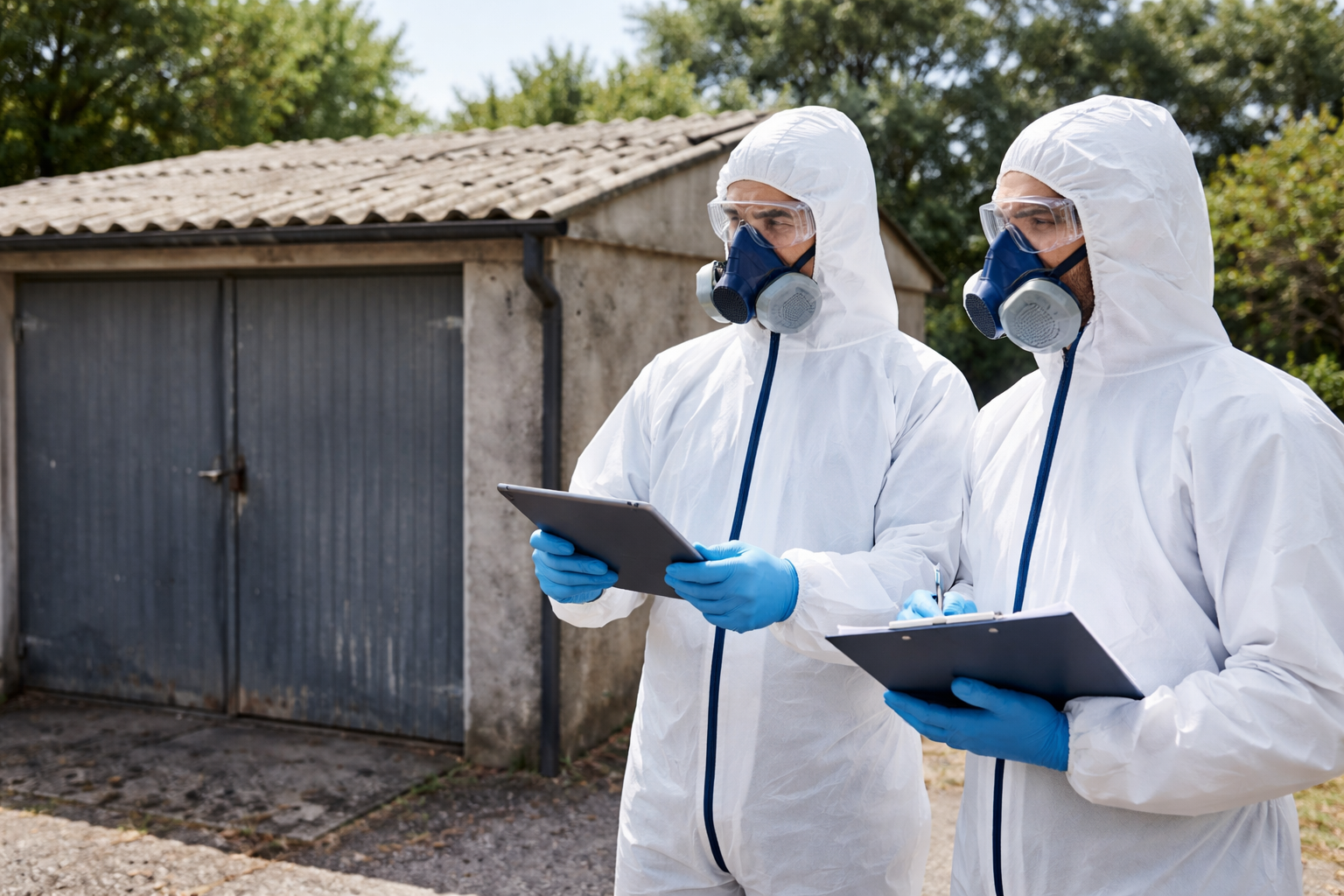
If you’ve discovered suspected asbestos floor tiles, a garage roof, or cement shed panels on your property — don’t panic. Many homes in the UK still contain asbestos materials, and in many cases these can be safely removed by trained professionals using the correct procedures.
At Atlas Asbestos, we specialise in non-licensed asbestos removal, helping homeowners safely deal with common asbestos materials such as floor tiles, cement roofing sheets, and outbuilding panels — quickly, affordably, and fully compliant with regulations.
This guide explains what you need to know — and why professional removal is always the safest option.
Where Asbestos Is Commonly Found in UK Homes
Many homeowners are surprised to learn how often asbestos appears in domestic properties, especially those built or renovated before 2000.
Common locations include:
- Asbestos floor tiles and tile adhesive
- Garage and shed roofs
- Cement wall panels and soffits
- Outbuildings and storage sheds
- Corrugated roofing sheets
- Rainwater goods and flue pipes
These materials are often classified as non-licensed asbestos, meaning they can be removed safely by trained specialists without requiring a licensed contractor — provided strict safety controls are followed.
Is Removing Asbestos Floor Tiles and Cement Sheets Dangerous?
Asbestos becomes dangerous when fibres are released into the air and inhaled. The key risk comes from:
- breaking materials
- cutting them
- sanding or drilling
- improper handling
- dry removal methods
However, when handled correctly using controlled removal techniques, specialist equipment, and proper waste procedures, these materials can be removed safely and legally.
Professional non-licensed removal teams use:
- controlled wet removal methods
- fibre suppression techniques
- protective equipment (PPE & RPE)
- sealed waste packaging
- regulated disposal routes
- area decontamination procedures
Safety is not optional — it is built into every step of the process.
Why You Should Never Remove Asbestos Yourself
DIY asbestos removal is strongly discouraged — even for “low-risk” materials.
Homeowners attempting removal often:
- break tiles or sheets accidentally
- use the wrong tools
- create airborne dust
- lack suitable respiratory protection
- dispose of waste incorrectly
- contaminate surrounding areas
This can expose you, your family, and neighbours to avoidable health risks — and may also lead to improper disposal fines.
Hiring a qualified removal specialist means:
- correct identification of materials
- compliant removal methods
- proper PPE and safety controls
- legal waste transport and disposal
- full job documentation if required
It protects both your health and your liability.
Not Sure If It’s Asbestos? Get It Tested First
Many materials look similar to asbestos products. Guesswork is never recommended.
If you’re unsure, the safest step is to arrange:
- an asbestos sample test
- a targeted asbestos survey
- a professional inspection
Sampling is quick and inexpensive — and it gives you certainty before any work begins. This prevents unnecessary removal and ensures the right method is used if asbestos is confirmed.
Our Non-Licensed Asbestos Removal Services
We regularly help homeowners with:
- asbestos floor tile removal
- garage roof sheet removal
- cement shed dismantling
- outbuilding panel removal
- small domestic asbestos projects
Our approach is:
- controlled
- compliant
- insured
- properly equipped
- responsibly disposed (Atlas Asbestos are a registered waste carrier (CBDU616410))
We keep disruption low and safety high.
When Should You Arrange Removal?
You should consider removal if:
- tiles are damaged or lifting
- roofing sheets are cracked or deteriorating
- you are renovating or refurbishing
- you are selling a property
- structures are being demolished
- materials are exposed or loose
Intact asbestos in good condition can sometimes be left in place — but damaged materials should always be assessed.
Get Professional Advice First
If you suspect asbestos in your home, the best next step is simple:
Get expert advice before touching anything.
A quick consultation or sample test can prevent costly mistakes and health risks. Non-licensed asbestos materials can often be removed efficiently — but only when handled correctly.
 Previous Post
 Next Post
