Understanding Asbestos in Your Property: Risks, Surveys & Safe Removal
Asbestos may not be visible, but its presence can pose a serious health risk to anyone in your home, workplace, or building project. Despite being banned in the UK since 1999, it’s still commonly found in properties constructed before that time — hidden in insulation, roofing, floor tiles, cement sheets or textured coatings.
At Atlas Asbestos, we help homeowners, landlords, contractors and businesses in Liverpool and the Northwest to identify, manage and remove asbestos safely and legally. This guide explains how asbestos may affect your property and what you should do next.
What Is Asbestos and Why Is It Still a Concern?
Asbestos was once widely used in construction because of its fire-resistant and insulating properties. However, we now know that when asbestos fibres become airborne — for example during renovation or drilling — they can cause serious lung diseases and cancers if inhaled. Because of this, UK law places strict duties on property owners and duty holders to manage asbestos risk effectively.
Step 1: Start with a Professional Asbestos Survey
If your property was built before 2000, the first step is to arrange an asbestos survey. A trained surveyor will inspect your building to locate and assess any asbestos-containing materials. This isn’t just good practice — it’s often required under UK regulations before refurbishment or demolition work can safely begin.
👉 At Atlas Asbestos, our surveying services provide clear, compliant reports that help you understand exactly what you are dealing with and how to manage it.
Step 2: Asbestos Testing — Get Accurate, Fast Results
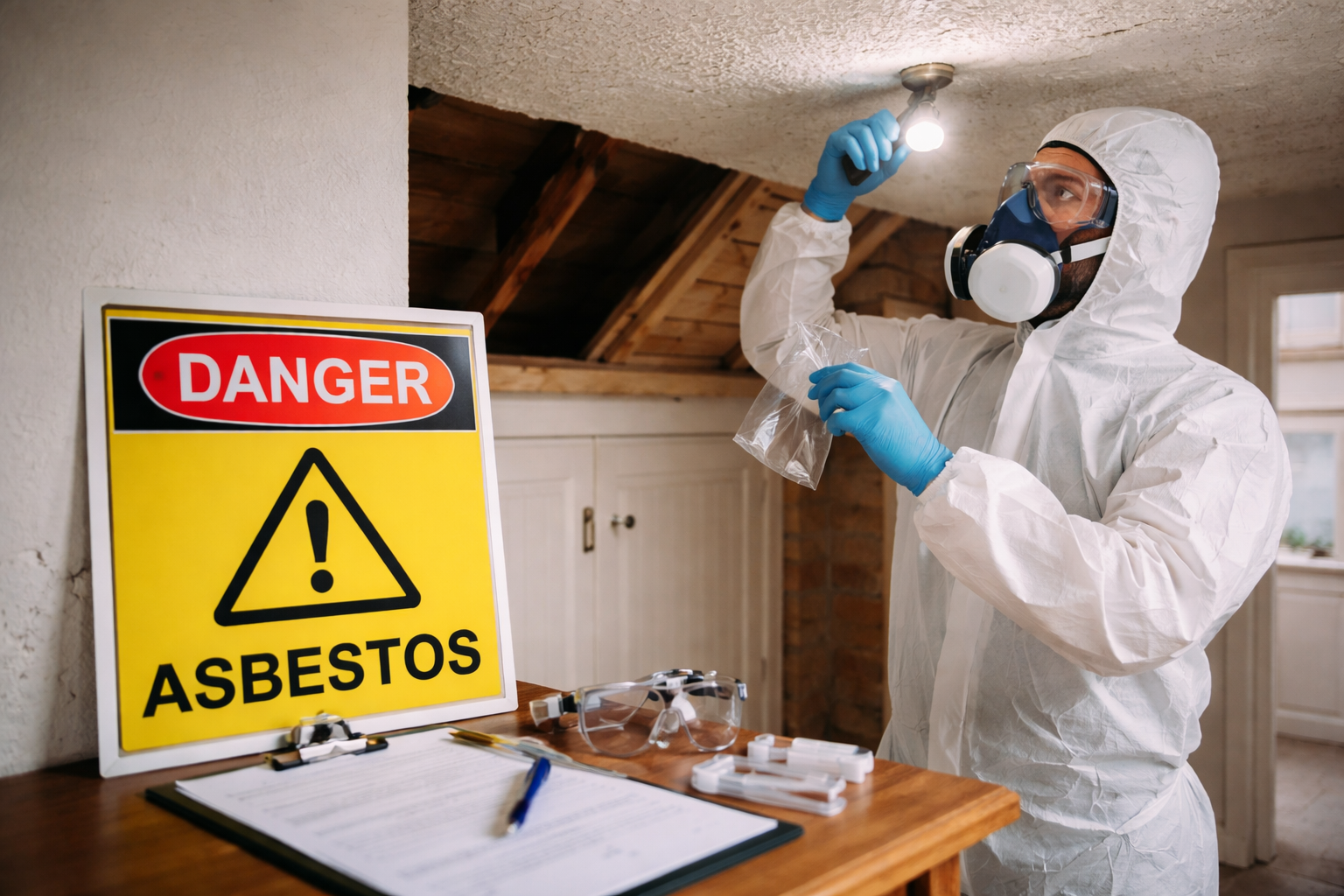
Sometimes you may suspect asbestos but be unsure whether a material contains it. That’s where professional testing comes in. A small sample is analysed in a lab to confirm if it contains asbestos fibres, giving you the certainty you need before any work proceeds.
Our testing services at Atlas Asbestos deliver fast, accurate results, so you can move forward with confidence.
Step 3: Safe Removal & Waste Disposal
If asbestos is present and likely to be disturbed by renovation, demolition or routine maintenance, removal is often the safest option. Removing asbestos without the proper training or equipment is dangerous — and illegal — in many cases.
Atlas Asbestos offers expert asbestos removal services, handling everything from low-risk non-licensed works (NLW) to guidance through more complex licensed work requirements. Once materials are removed, we also manage safe asbestos waste collection and disposal to ensure every step complies with environmental and safety laws.
Step 4: Ongoing Compliance & Training
Being asbestos-aware doesn’t stop at removal. Business owners, property managers and tradespeople need to understand their responsibilities under the Control of Asbestos Regulations 2012. Investing in asbestos training empowers your team to work safely around potential ACMs and keeps you audit-ready.
We provide tailored Asbestos Awareness Training options to suit your needs, supporting compliance and safety culture within your organisation.
Why Professional Help Matters
Handling asbestos is complex. Not only does it involve health risks and strict legal obligations, but improper removal can result in contamination, fines or exposed occupants. Professional asbestos services ensure:
- Clear identification and risk assessment
- Compliant surveying and reporting
- Safe, controlled removal procedures
- Licensed waste disposal in line with regulations
These are essential, not optional — for the wellbeing of your people and the future value and safety of your property.
Get Started with Confidence
If you think asbestos may be present in your property — or you’re planning renovation, demolition or compliance work — don’t take a chance. Contact Atlas Asbestos today for a survey, quote or expert advice. Our team is ready to guide you through every step with professionalism, safety and clarity.
 Previous Post
 Next Post
